

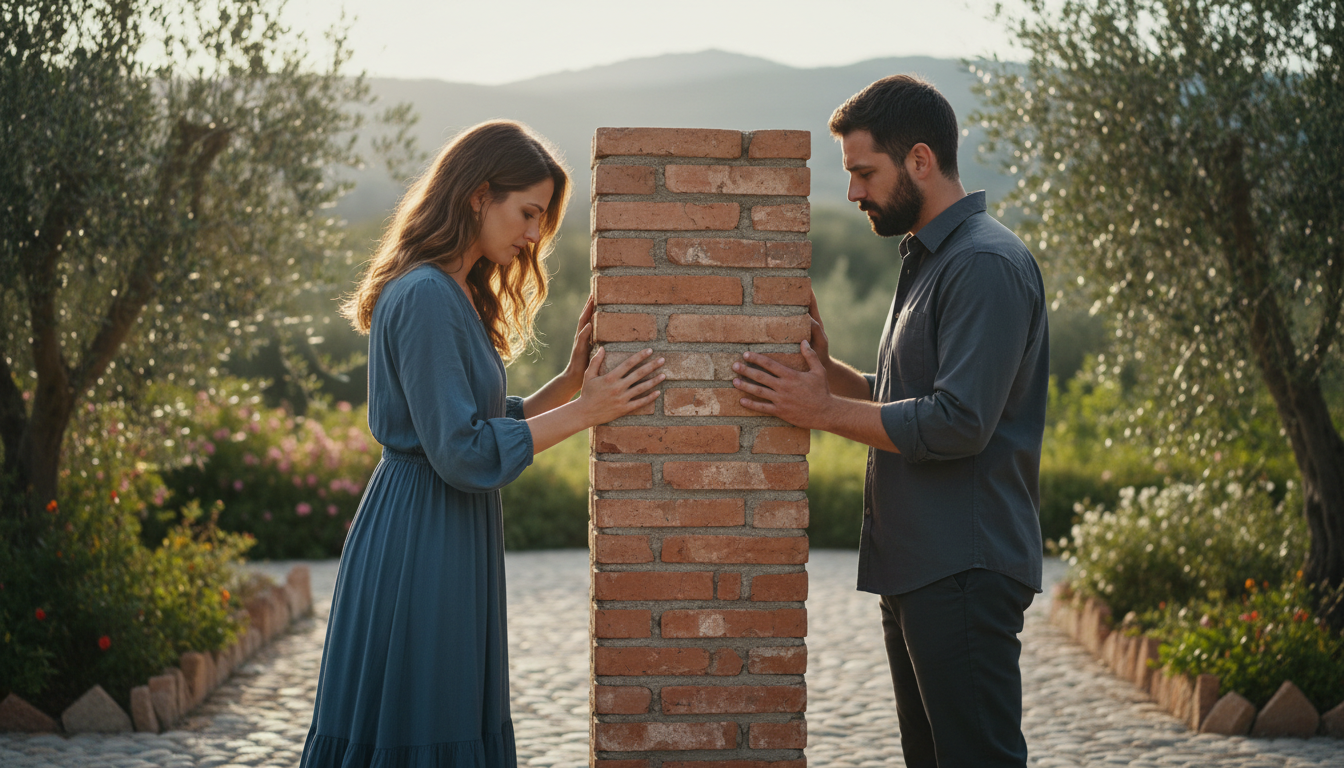
Marriage was designed by God to be a place of love, safety, intimacy, and connection. But in many marriages, couples slowly fall into unhealthy marriage patterns that create distance instead of closeness. One of the most common patterns is building emotional walls in marriage.
These walls are not made of brick and stone. They are made of fear, hurt, disappointment, mistrust, criticism, and emotional self-protection. When one or both spouses begin to build walls, the relationship can start to feel lonely, tense, and disconnected.
If your marriage feels this way today, you are not alone. Many couples develop emotional walls when they no longer feel safe, understood, or valued. The good news is that walls can come down when trust, compassion, and emotional safety are rebuilt.
If you need help breaking down the walls in your marriage, you do not have to keep trying to figure it out alone. Visit Fully Living Now to learn more about marriage counseling with Mike Dawson in Flower Mound, TX.
What Does It Mean to Build Walls in Marriage?
If Superman stood in front of a wall, he could look straight through it with X-ray vision and tell us exactly what was on the other side. He could even break through the wall if someone needed help.
But marriage does not work that way.
When your spouse is building emotional walls, you cannot simply see through them, force your way in, or demand immediate openness. And that can feel discouraging. You may know there is hurt, fear, or disconnection on the other side, but you may not know how to reach your spouse in a way that helps rather than harms.
That is why emotional walls in marriage are so painful. They block the closeness both spouses long for, yet they are often built for a reason.
Why Do People Build Emotional Walls?
In marriage, emotional walls are usually a form of self-protection. A spouse builds a wall when they feel threatened, wounded, criticized, controlled, neglected, or emotionally unsafe. The wall may not be healthy in the long run, but it often begins as an attempt to survive emotionally.
Many husbands and wives do not actually want distance. They want safety. So they withdraw, shut down, avoid hard conversations, or protect their hearts because vulnerability no longer feels safe.
Common reasons spouses build walls in marriage:
- They are unsure whether their spouse truly cares about them or loves them.
- They have experienced repeated anger, harsh demands, or emotional outbursts.
- Hurtful words, threats, or ongoing criticism have damaged trust.
- Important issues have been ignored for too long.
- Love, affection, humor, attention, or emotional presence has been withheld.
- They struggle with feelings of inadequacy or failure.
- They feel constantly judged rather than understood.
- They feel emotionally disconnected and alone in the relationship.
When these experiences pile up over time, walls can become a predictable pattern in marriage.
The Link Between Fear and Emotional Walls
Fear and walls often go together.
In unhealthy marriage dynamics, fear says, I do not feel safe enough to be fully known here. The wall then becomes the emotional strategy used to stay protected.
A spouse may fear rejection, criticism, conflict, being controlled, not being good enough, or being hurt again. Instead of moving toward connection, they move toward self-protection.
That is why emotional walls are not usually the deepest issue. They are often a symptom of something deeper happening in the heart and in the relationship.
Are Emotional Walls Always Bad?
Not exactly.
Building walls is a natural human response when we feel unsafe. In that sense, emotional walls make sense. They reveal that something important is happening internally. They signal hurt, fear, or disconnection that needs attention.
But while walls may feel protective in the moment, they eventually interfere with the closeness God intended for marriage. God designed marriage to reflect covenant love, trust, unity, and intimacy. A wall may protect a wounded heart for a season, but it also blocks emotional connection, vulnerability, and healing.
If a marriage is going to become safe and connected again, the wall cannot remain permanent.
How Emotional Walls Affect a Marriage
When emotional walls stay in place, couples often begin to experience:
- Less emotional intimacy
- More misunderstanding
- Defensiveness and withdrawal
- Increased loneliness in marriage
- Greater conflict or complete emotional shutdown
- Less affection, playfulness, and friendship
- A growing sense of hopelessness
In some marriages, the wall looks loud and defensive. In others, it looks quiet and distant. Either way, the result is usually the same: both spouses feel more alone.
Visit Fully Living Now to learn more about marriage counseling with Mike Dawson in Flower Mound, TX.
How to Help Your Spouse Take Down Emotional Walls
When we see a wall, our natural instinct is to go over it, around it, under it, or straight through it. In marriage, that often looks like pushing harder, demanding answers, forcing conversations, or insisting on immediate vulnerability.
But that usually backfires.
If your spouse has built emotional walls, trying to break them down by force often triggers even more fear and defensiveness. Instead, healing begins when you approach the wall with wisdom, patience, and a truly open heart.
-
Accept that the wall is there for a reason
Do not minimize it, mock it, or treat it as irrational. The wall may frustrate you, but it usually exists because your spouse feels vulnerable or unsafe in some way.
When you accept that the wall has a reason, you shift from attack mode to understanding mode. That change alone can begin to lower tension.
-
Focus on creating safety, not demanding openness
Your spouse is far more likely to open up when they feel emotionally safe. Openness cannot be forced. Trust cannot be rushed. Vulnerability grows where safety is consistently present.
This means your goal should not be, How do I get my spouse to open up? A better question is, How do I become a safer person to open up to?
-
Be trustworthy in small, consistent ways
Trust is not rebuilt through one big conversation. It is rebuilt through repeated experiences of honesty, kindness, humility, and dependability.
Do what you say you will do. Listen carefully. Keep confidence. Respond gently. Apologize sincerely when you are wrong. Emotional safety is built one interaction at a time.
-
Care more about your spouse’s heart than getting your own way
This is hard, but it matters. If your spouse feels like your real goal is to win, be right, control the conversation, or get your needs met immediately, the wall will stay up.
But when you communicate, Your heart matters to me. I want to understand you. I care about your pain, that changes the emotional climate of the marriage.
-
Value differences instead of treating them as threats
Many couples assume that differences are proof that something is wrong. In reality, differences often reflect personality, perspective, family background, preferences, and communication style.
Not every difference is a moral issue. Not every disagreement means one person is right and the other is wrong. Sometimes emotional walls go up because a spouse feels repeatedly dismissed for simply being different.
-
Suspend judgment and choose compassion
Harsh criticism, negative assumptions, and constant correction do not create connection. Compassion does.
Try to understand before you respond. Be curious about your spouse’s experience. Ask yourself what fear, hurt, or sadness may be underneath their withdrawal or defensiveness.
Compassion does not mean agreeing with everything. It means caring enough to understand what is really happening.
What the Bible Says About Safety and Connection in Marriage
A Christian marriage should reflect the love, grace, and truth of Christ. Scripture calls husbands and wives to love deeply, serve humbly, forgive generously, and honor one another.
When safety is missing in marriage, walls often rise. When grace, gentleness, and truth are restored, walls can begin to come down.
God did not create marriage for emotional distance and self-protection. He created it for covenant love and faithful connection. That does not mean couples never get hurt. It means healing is possible when both husband and wife move toward honesty, humility, and love.
When to Seek Marriage Counseling
Some walls are deeply rooted. If your marriage has been stuck in patterns of criticism, avoidance, shutdown, anger, or emotional disconnection for a long time, outside help may be needed.
Marriage counseling can help couples:
- Identify the deeper fears behind emotional walls
- Rebuild trust and emotional safety
- Improve communication patterns
- Heal repeated hurts
- Learn healthier ways to respond to conflict
- Reconnect emotionally and spiritually
Sometimes couples wait too long to get help because they think the wall will eventually come down on its own. Often it will not. Wise support can make a real difference.
In Short: Building Walls in Marriage
When we see a wall, we naturally want to get past it as quickly as possible. But in marriage, emotional walls are rarely removed by force. They come down when safety is restored, trust is rebuilt, and both spouses begin to feel seen, valued, and cared for again.
If you want to see the person on the other side of the wall for who they truly are, you must learn to honor what the wall is protecting. And if you recognize that you are the one behind the wall, healing begins by admitting that the wall is there and inviting God to help you take it down.
Healthy, connected marriages are not built by pressure. They are built by love, humility, safety, trust, and grace.
Frequently Asked Questions
What are emotional walls in marriage?
Emotional walls in marriage are protective barriers a spouse builds when they feel hurt, criticized, unsafe, or disconnected. These walls often show up as withdrawal, defensiveness, silence, or lack of vulnerability.
Why does my spouse put up walls?
A spouse may build walls because they fear being judged, rejected, criticized, controlled, or emotionally hurt. The wall is often an attempt to feel safe rather than a desire to damage the relationship.
How do you break down walls in a marriage?
Emotional walls usually come down through safety, patience, trust, compassion, and consistent loving behavior rather than pressure or force. Creating a safe environment is more effective than demanding vulnerability.
Can marriage counseling help with emotional walls?
Yes. Marriage counseling can help couples understand the deeper fears behind emotional walls, improve communication, rebuild trust, and create a more emotionally safe and connected relationship.
What does the Bible say about emotional intimacy in marriage?
The Bible presents marriage as a relationship of unity, love, sacrificial care, and faithfulness. Emotional intimacy grows when husbands and wives treat one another with grace, honor, tenderness, and truth.
If you need help breaking down the walls in your marriage, you do not have to keep trying to figure it out alone. Visit Fully Living Now to learn more about marriage counseling with Mike Dawson in Flower Mound, TX.